

Written by Isaac Silver
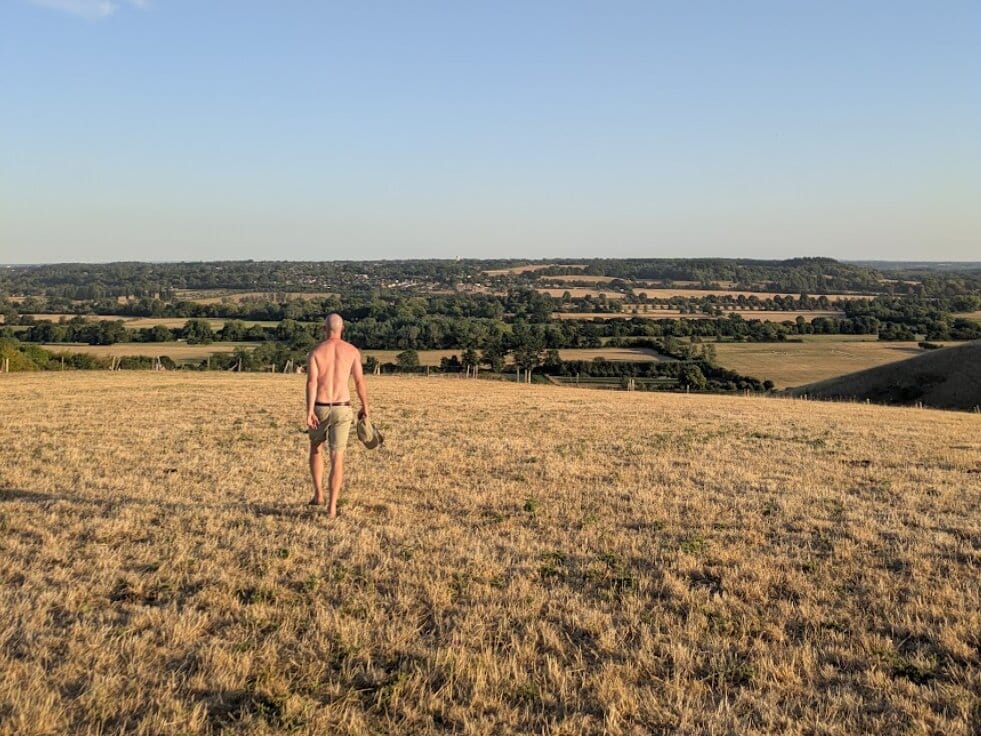
It’s the closing of Summer 2026, a season of what has felt like being flattened under a magnifying glass. On the hottest days, it crossed 30 degrees Celsius in the shade.
We’ve been having some sobering conversations about drought. From March 1st until August 18th, there were just 73 millimetres of rain. The immediate sad news is that, because of the arid weather, a lot of this year’s hemp crop went to seed. We’re not going to have a good harvest. Plants bolt (divert their energy to reproducing themselves instead of growing) due to environmental stress, and this summer has been starkly stressful. Amidst the drought and wildfires, it has felt like another watershed moment for the accelerating climate crisis that will create more and more extreme seasons. Pausing here for a moment of grief for the ravaged ecosystems across the country.
Hemp is lauded as a drought-resilient crop for its extraordinarily low water requirements, just a few hundred millimetres per growing season. Cotton, the leading fibre crop, needs 10,000 litres of water to produce 1kg of cotton fibre whereas hemp only needs 300-500 litres (94% less!). Additionally, because hemp’s root system can reach up to nine feet deep, it is effective at finding its own groundwater in drier soils. In healthier climate conditions, hemp roots help to break up compacted earth and anchor the soil – protecting and encouraging a biodiversity of critters, higher water retention in the soil, and cleaning away contaminants via phytoremediation. Biodiversity is the prime antidote to mass-extinction because of the multitude of symbiotic relationships it fosters. Thriving and resilient ecologies are those with many, many strands comprising their intricate webs.
Compounding drought challenges hemp’s natural resilience
When drought stops being the exception and increases in intensity and frequency, hemp’s powers start coming up against the wall. Drier soils become more hardened and deader in a feedback loop, making it increasingly difficult for root systems to penetrate them. These arid, packed soils are less thermally conductive so they absorb and retain solar heat for longer, heating up everything in the soil and the weather above the surface even after the sun sets. Lighter-coloured soils, which are generally those deficient in organic matter, also reflect more solar radiation. All this heat stress in roots and on the above-surface parts of plants exposed to direct sunlight is a potent killer.
Droughts-on-droughts also lower the water table as heat and dry air pull moisture out of the soil, while aquifers are missing the replenishment they would get from rainfall. Some of our fields are on high, dry hills, and become more unsuitable every year as the water table continues to recede.
Thoughtful agriculture to anticipate the future
How can we survive drought and keep growing hemp in the future? We need to intervene in clever ways, creating an agro-ecological practice (agriculture that mindfully works with the ecosystem) that synergises ours and hemp’s respective powers. Thankfully, we have many ideas.
First, collecting and retaining water. We want to build rainwater collectors to take advantage of our large, flat, sloped barn roof. Anticipating that dry seasons will get drier and wet seasons wetter, improving our storage capacity will help carry over some of times of excess to the times of want. I’m reminded that abundance never comes from nowhere: abundance in one place and time is balanced by scarcity in another. Climate crisis turns this balance into more of an erratic seesaw between extremes, so learning how we can impose counterweights at strategic moments is an important tool for resilience.
Second, proper irrigation. We’re keen to avoid water-intensive growing methods, therefore a drip irrigation system might help. Drip irrigation is (on principle) gentler, less interventionist, and responds more intuitively to natural conditions.
Third, heat mitigation! With the dry comes that oppressive, sometimes deadly heat. We’re beginning to research the possibilities of growing hemp in the shade – under fabric covers, or even better, under tree canopy. Growing hemp in a woodland rather than open field would make the harvest more involved, but it capitalises on a forest’s excellence in finding its own water. Woodland soils are far more resilient and biodiverse thanks to this combination of cool, shaded surface and irrigated, stabilised soils. A new generation of farmers are turning experimentally to biomimicry in their practice.
Which leads us to the crux of how we all get through this: shifting our worldviews from the iron-fisted control of human-exceptionalism (we can solve it all ourselves) to the humility and curiosity of the ecological (it takes the help of the whole forest). Being a part of the forest ourselves, we still have our part to play of course. But nobody is better at dowsing for water than trees.
Featured image caption: Walking across drought-affected fields in Oxfordshire during the partial lunar eclipse, August 2026.



